The AI Integration Blueprint: Best Practices for Sustainable Business Transformation
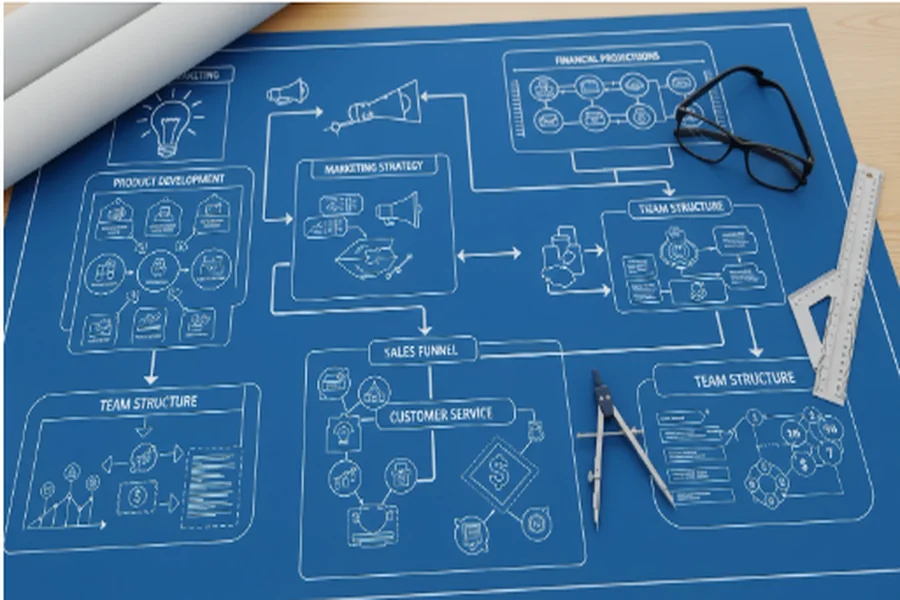
Artificial intelligence has moved past the experimental phase. Today, it is a core operational engine. However, the gap between a “cool demo” and a “production-ready solution” is wide. Many AI initiatives stall because they lack the structural support to survive real-world business complexity.
Successfully embedding AI into your daily operations requires more than just code; it requires a strategic framework. Here is the blueprint for integrating AI, leveraging the proven methodologies of Addepto.
1. Identify the “Value-First” Objectives
The most common mistake is “tech-first” thinking: buying an AI tool and searching for a problem to solve. High-impact integration starts with a specific business pain point.
- Ask: Where do we have the highest density of repetitive tasks? Where would a 10% increase in forecasting accuracy save the most capital?
- Addepto Tip: We help clients map AI initiatives directly to their KPIs, ensuring that every project has a measurable ROI before development begins.
2. Fortify Your Data Foundation
AI is only as intelligent as the data it consumes. If your data is siloed, inconsistent, or “dirty,” your AI will produce unreliable results.
Key priorities for a robust foundation include:
- Data Consolidation: Breaking down silos so the AI sees the “full picture.”
- Quality Control: Cleaning and labeling data to ensure high-fidelity outputs.
- Governance: Establishing who owns the data and how it stays secure.
- The Addepto Edge: Our Data Engineering services ensure your infrastructure is scalable and “AI-ready” from day one.
3. The “Crawl-Walk-Run” Strategy
Don’t overhaul your entire enterprise at once. Start with a Proof of Concept (PoC) to validate the technical feasibility and business impact.
Once the PoC proves its value, you can scale the solution across other departments. This phased approach reduces risk and allows for iterative improvements.
4. Seamless Workflow Orchestration
AI should be a “silent partner,” not a disruptive hurdle. The goal is to embed AI insights directly into the tools your team already uses—be it your CRM, ERP, or internal dashboards.
Key Concept: The best AI integration is the one that employees don’t have to go out of their way to find. It should meet them where they work.
5. Cultivating an “Augmented” Culture
Technology doesn’t drive transformation; people do. For AI to stick, your team must understand it and trust it.
- Training: Helping employees interpret AI-generated signals.
- Collaboration: Designing workflows where AI handles the heavy data lifting while humans handle the nuanced decision-making.
- Addepto’s Strategy: We prioritize Change Management, ensuring that AI is introduced as a tool to empower your workforce, not replace it.
6. Responsible AI & Governance
As AI becomes part of your operational nervous system, transparency and ethics are non-negotiable. Organizations must implement frameworks for:
- Bias Detection: Ensuring models are fair and objective.
- Compliance: Staying ahead of evolving AI regulations (like the EU AI Act).
- Monitoring: Continuously tracking model performance to prevent “drift.”
Conclusion
Integrating AI into business operations is a journey of strategic alignment. By starting with clear objectives, building on a solid data foundation, and prioritizing human-AI collaboration, you can transform your organization from reactive to predictive.
Success isn’t found in the most complex model; it’s found in the most effective integration.