1-1/2 to 1 Reducer Coupling Complete Guide and Uses
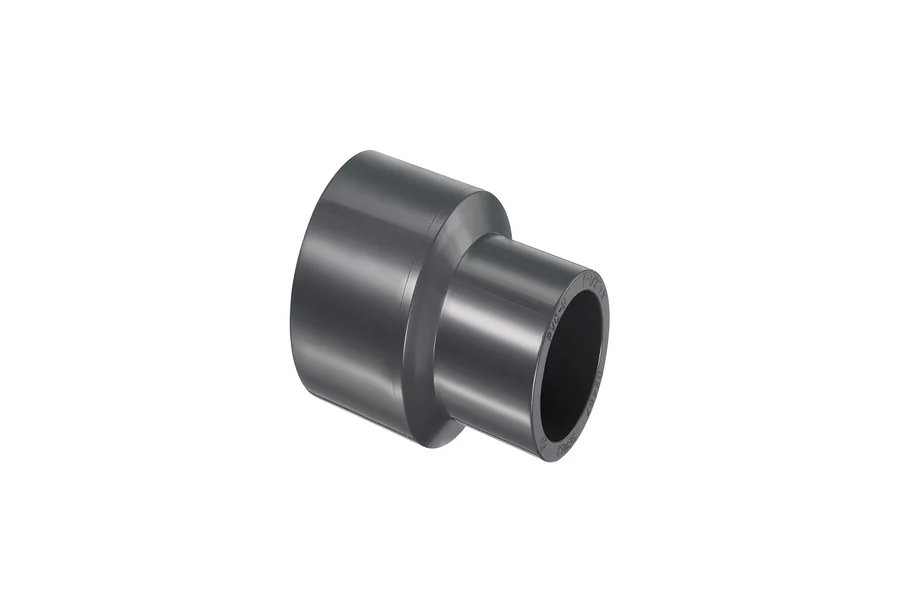
1-1/2 to 1 Reducer Coupling common fitting plumbing, piping and industrial applications wherein a requirement exists to join two pipes that do not have the same diameter. This kind of coupling will enable a smooth maturity between a 1-1/2 inch pipe to a 1 inch pipe in which there could be a proper flow and pressure control within the system. Reducer couplings also play a crucial role in fluid handling and are utilized in residential, commercial and industrial applications.
In this article, we will cover the types of 1-1/2 to 1 Reducer Coupling, materials, installation methods, applications, maintenance tips, and troubleshooting advice. The knowledge on the operation of this coupling and where to apply it has a positive implication in terms of the performance and durability of piping systems.
Types of 1-1/2 to 1 Reducer Coupling
1-1/2 to 1 Reducer Coupling is available in various forms among them being concentric types and eccentric types. Concentric reducers are symmetrical and have a centered flow and this is best suited to vertical piping or where the distribution of pressure needs to be uniform. Eccentric reducers, feature an offset centerline and this prevents air pockets in the horizontal piping systems and also makes the flow of liquids to be smooth.
There are also threaded, welded and socketed reducer couplings. Threaded reducers can be installed and uninstalled easily thus they are applicable in the temporary or adjustable systems. Welded reducers offer an enduring and nonleak connection and are typically employed in the industrial applications. PVC or plastic piping reducers Socketed or slip-on reducers are commonly made to fit household plumbing installations. The selection of the appropriate type is based on the system design, compatibility of materials and maintenance needs.
Materials Used for Reducer Couplings
1-1/2 to 1 Reducer Coupling is made of various materials to fit various applications. High pressure and high temperature environments It is notorious that stainless steel is resistant to corrosion and highly durable. The industrial usage of carbon steel is rampant in the industries that require strength and toughness.
Plastic or PVC reducer couplings are used in residential plumbing as they are lightweight, low-cost and not susceptible to chemical corrosion. Mircuitous is brass and copper reducer in water supply lines as they are very resistant to rust and can be easily joined in soldered connections. The material used has a direct influence on the life span, pressure holding, and maintenance of the coupling.
Applications of 1-1/2 to 1 Reducer Coupling
The applications of 1-1/2 to 1 Reducer Coupling are diverse across different industries. It is also applied in plumbing in order to join supply lines and reduce pipe sizes to allow appropriate flow to fixtures like sinks, showers, and toilets. In HVAC systems, the reducer couplings are used to control the movement of air between different ducts which have different sizes.
The industrial uses are in linking process pipelines in chemical, pharmaceutical, and food industries where the flow control is vital. They are also utilized in irrigation systems, water treatment plants and oil and gas pipelines. Reducer couplings eliminate pressure drops, leaks and turbulence caused by smooth transition between the pipes of varying sizes which would jeopardise system efficiency.
Installation Tips for Reducer Couplings
The installation of 1-1/2 to 1 Reducer Coupling is important in the system functioning. The first thing to start with is to make sure that the two pipes are clean and clear of debris and in the right place. In threaded couplings, plumber tape the male threads to avoid leakages. Connect the coupling body and the threads together without being excessively tightened as this may result in thread destruction or damage to the coupling body.
The installations of welders should be done by skilled experts to provide a proper seal and prevent the weak joints. In plastic systems, make sure that the ends of the sockets and pipes are completely inserted and covered with the help of appropriate solvent or glue. One also needs to take care not to bend or strain the coupling too much because this can cause its early failure. Correct alignment and safe installation is a long-term life of the coupling and makes it free of problems during maintenance.
Maintenance and Troubleshooting
1-1/2 to 1 Reducer Coupling does not take much maintenance provided it is properly installed. Leaks, corrosion, or cracks are also to be checked on a regular basis, particularly during industrial systems or high-pressure. Stainless steel and carbon steel couplings are to be inspected on rust or corrosion with time, whereas plastic reducer is to be inspected on the stress cracks or deformation.
In case of leak, ensure it is threaded, aligning and sealant. Weak ties or broken strings tend to be the primary factors. Welds in systems that have been welded should not be corroded or cracked. Timely replacement of defective reducer coupling avoids loss of time and possible destruction of pipes and equipments attached to the system. Efficiency and safety of piping systems that utilize 1-1/2 to 1 Reducer Couplings are guaranteed by proper maintenance.
Benefits of Using Reducer Couplings
The 1-1/2 to 1 Reducer Coupling has a variety of advantages. They enable the easy transition of the flow between the pipes of varying size and decrease the turbulence, pressure losses, and wear of the systems. They enhance fluid management and are critical in linking various pipe systems.
Reducer couplings are flexible, simple to mount, and which can be made out of a variety of materials to accommodate the desired applications. They also increase safety through the reduction of the risk of leakages and the maintenance of pressure. They are essential in an industrial environment in ensuring flow rates are maintained, this is essential especially in cases where tight control over processes is required. High-quality reducer coupling helps to increase the general reliability and stability of plumbing and piping systems.
Final Thought
1-1/2 to 1 Reducer Coupling This is an essential part in plumbing, industrial and HVAC systems where piping of varying dimensions must be linked together with ease. Knowledge of the types, materials, use, how to install as well as how to maintain the system guarantees optimum performance. Effective choice and fitting of reducer couplings ensure that there are no leaks, pressure drops and turbulent flows which enhance the existence and effectiveness of the overall system. With either residential plumbing or major industrial work, these couplings are necessary to ensure the efficient flow of piping systems in a seamless and safe manner.
FAQs
What is a 1-1/2 to 1 Reducer Coupling used for?
It is used to connect a 1-1/2 inch pipe to a 1 inch pipe ensuring smooth flow and pressure control.
Can 1-1/2 to 1 Reducer Coupling be used in plumbing and industrial applications?
Yes it is suitable for both residential plumbing and industrial piping systems.
What materials are 1-1/2 to 1 Reducer Couplings made from?
They can be made from stainless steel, carbon steel, brass, copper, and PVC depending on the application.
How do I install a 1-1/2 to 1 Reducer Coupling?
Clean and align the pipes apply sealant or tape if threaded and tighten carefully or weld if required.
Do 1-1/2 to 1 Reducer Couplings require maintenance?
Yes periodic inspection for leaks, corrosion, and cracks ensures longevity and performance.
What types of 1-1/2 to 1 Reducer Coupling are available?
Concentric, eccentric, threaded, welded, and socketed variants are commonly available.
Why is a reducer coupling important in piping systems?
It ensures smooth flow between different pipe sizes prevents turbulence, and maintains proper pressure.